Emergency Water Removal in Trader's Point: Response & Pricing
When water is rising in your Trader's Point home at midnight, you are not browsing for articles. You are scanning for a phone number and a price range you can trust. This page is built for that moment. Trader's Point Water Restoration has handled emergency water removal across Central Indiana since 2018, and we have learned that the homeowners who recover fastest are the ones who understand two things before they hire anyone: what response time actually means, and what the pricing reflects.
There is a wide gap between a company that says they are available 24 7 and one that has a technician with a truck mount extractor pulling into your driveway in under an hour. There is also a wide gap between a $1,200 invoice and an $8,000 invoice, and that gap is rarely about who is overcharging. It is about water category, square footage affected, how long the water sat, and what materials it touched. Below you will find a single deep comparison built from real Trader's Point jobs, paired with the analysis you need to make a fast, informed call. If we cannot help with your specific situation, we will tell you directly and point you toward someone who can.
Problem: Water Keeps Spreading While You Wait for Help
Every hour water sits, it travels further into drywall, subfloors, cabinet bases, and insulation. By hour 24, you are looking at mold risk. By hour 48, microbial growth is often visible. A small leak you ignored on Friday night becomes a full demolition project by Monday.
Solution: Call Within the First Hour and Start Source Control
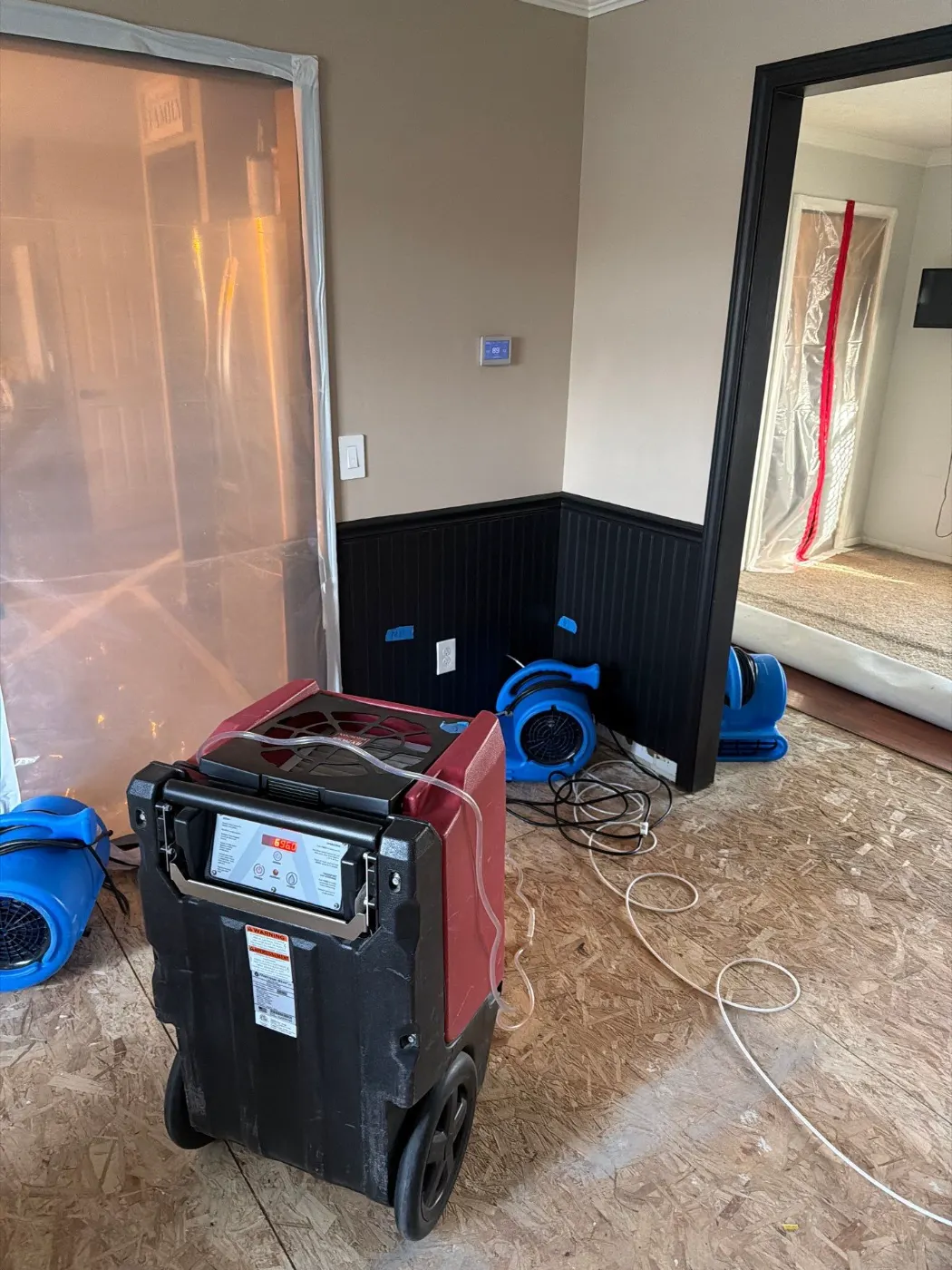
The single highest impact action you can take is shutting off the water source. Find your main shutoff (usually in the basement, crawlspace, or near the water heater in Trader's Point homes) and close it. Then call a certified restoration team. Trader's Point Water Restoration targets a within 2 hours arrival window for Trader's Point emergency calls, and our trucks roll stocked with truck mounted extractors, air movers, and moisture meters. While you wait, do these three things:
- Move electronics, rugs, and furniture legs out of standing water if it is safe to do so.
- Photograph everything for your insurance claim before you touch anything else.
- Open windows only if outdoor humidity is lower than indoor humidity, otherwise keep them shut.
For a fuller breakdown of those first decisions, our guide on the first steps after water damage covers what to do and what to skip in the first 60 minutes. One thing worth flagging: do not plug in or unplug any appliance standing in water, and if the panel itself is wet, kill power at the meter before anyone reenters the space. Electrical risk is the most underestimated hazard in the first hour, and it is the one that turns a property loss into a hospital trip.
Problem: The Cheap Quote Sounds Too Good
A lowball number on the phone often means a crew that will extract surface water, run two fans for a day, and leave. Two weeks later you find mold behind the baseboards, and now you are paying twice.
Solution: Demand IICRC Standards and Written Scope
Ask any company three questions before they start: Are your technicians IICRC certified? Will you document moisture readings before, during, and after drying? Will you provide a written scope and final dry out certificate? If the answer to any of those is vague, keep looking. Trader's Point Water Restoration provides all three on every Trader's Point job, and our drying logs hold up to any insurance adjuster review. Also ask whether they are pulling baseboards and drilling weep holes to dry wall cavities, or just blowing air across the surface. Surface drying alone leaves hidden moisture that feeds mold within ten days.
Problem: You Are Not Sure If You Should File a Claim
Filing a small claim can sometimes raise premiums more than the payout is worth. Skipping a legitimate claim leaves money on the table.
Solution: Get an Honest Damage Assessment First
Have a certified estimator walk the loss before you call your insurer. If the repair cost is clearly below your deductible, paying out of pocket may be smarter. If it is well above, file and document everything. We give homeowners that honest read at no cost during the initial inspection, even if it means we tell you not to file.
Get Water Out, Get Answers, Get Back to Normal
Emergency water removal is not the time to shop five quotes. It is the time to call a certified local crew that will arrive fast, price the work honestly, and document everything for your insurance. Trader's Point Water Restoration has served Trader's Point property owners since 2018 with that exact approach. Call us now for immediate response, or read more on our water damage restoration service page to see the full scope of what we handle.
Problem: Contaminated Water Is Hiding Risks You Cannot See
If the water came from a toilet overflow, a sewer line backup, or storm flooding through Trader's Point streets, you are dealing with Category 3 water. This is not a mop and bucket situation. Sewage carries bacteria, viruses, and parasites that can make your family sick days after the water is gone.
Solution: Treat It Like the Biohazard It Is
Stay out of contaminated water. Keep children and pets away. Do not run the HVAC system because it can spread contaminants through ductwork. A certified crew will set containment, use PPE, extract the water, remove affected porous materials (drywall, carpet pad, insulation), apply EPA-registered antimicrobials, and dry the structure under controlled conditions with moisture meters and hygrometers. Anything porous that absorbed Category 3 water is generally not salvageable, including upholstered furniture, mattresses, and particleboard cabinetry. We cover the full protocol in our piece on why sewage backup is a Category 3 emergency.
Problem: You Do Not Know What Emergency Water Removal Actually Costs
Pricing feels like a black box during a panic. Some companies quote $500 and bill $8,000. Others refuse to give any number until they have already started work. Both approaches cost you trust and money.
Solution: Understand the Three Variables That Drive Price
Real emergency water removal pricing in Trader's Point comes down to three factors: water category, affected square footage, and drying time. Category 1 (clean water from a supply line) runs the least. Category 2 (gray water from appliances or showers) is mid range. Category 3 (sewage, flood water, or anything contaminated) costs the most because it requires containment, antimicrobial treatment, and often material removal. Typical ranges look like this:
- Small loss, Category 1, under 300 sq ft: roughly $1,200 to $2,800
- Medium loss, Category 2, 300 to 800 sq ft: roughly $2,800 to $6,500
- Large or Category 3 loss, over 800 sq ft: $6,500 to $15,000 or more
These are honest ballpark ranges, not fixed quotes. Your actual number depends on what we find under the flooring and inside the walls. Hardwood floors, plaster walls, multi story spread, and finished basements all push the number up because they hold moisture longer and demand more equipment days. The good news is that most water damage events are covered by homeowners insurance when the cause is sudden and accidental. Our walkthrough on filing a water damage insurance claim explains exactly what your adjuster wants to see and how to document the loss correctly.
Problem: You Are Worried This Will Happen Again
Solution: Fix the Failure Point Before the Rebuild
Once the structure is dry, identify why the loss happened. Replace the burst supply line with braided stainless. Add a leak sensor near the water heater, washing machine, and under sinks. If a sump pump failed, install a battery backup unit. Spending a few hundred dollars on prevention after a Trader's Point water loss is the cheapest insurance you will ever buy, and it keeps you from reading this article twice.
Frequently Asked Questions
How fast can Trader's Point Water Restoration arrive for emergency water removal in Trader's Point?
Our standard emergency response window for Trader's Point and surrounding central Indiana communities is 45 to 90 minutes, 24 hours a day. Dispatch confirms ETA on your initial call.
What does emergency water extraction cost in Trader's Point?
Extraction runs $1.50 to $4.00 per square foot in Trader's Point, depending on water category and depth. Trader's Point Water Restoration provides a written estimate before any work begins, and most jobs are covered by homeowners insurance minus your deductible.
Will my insurance pay for Trader's Point Water Restoration services?
Most policies cover sudden and accidental water damage. Trader's Point Water Restoration bills your carrier directly, documents every step with moisture readings and photos, and works with your adjuster so you only pay your deductible in most Trader's Point claims.
How long does structural drying actually take?
Typical Trader's Point residential drying takes 3 to 5 days with proper equipment placement. Slab foundations, hardwood, and dense materials may extend to 7 days. We monitor daily and remove equipment only when materials reach pre-loss dry standard.
What is the difference between Category 1, 2, and 3 water?
Category 1 is clean supply line water. Category 2 is gray water from appliances or toilet overflow without solids. Category 3 is black water including sewage, flood water, or any source carrying pathogens. Category 3 requires removal of porous materials and full antimicrobial treatment.
Have a restoration question?
Our IICRC certified Trader's Point crew is ready to help. Free assessments, estimate based on what we can sees, no pressure.