Toilet Overflow Cleanup in Trader's Point: Category 3 Protocol
A toilet overflow is not a mop and bucket job. The moment contaminated water crosses the rim, you are dealing with Category 3 water under IICRC S500 standards, which means pathogens, bacteria, and potential viral load saturating every porous surface it touches. In Trader's Point homes, we see this happen most often from sewer line blockages, flange failures, and main line backups during heavy rain events. The clock starts immediately. Drywall wicks contaminated water vertically at roughly 1 inch per hour. Subfloor saturation begins within 2 hours. Bacterial colonies double every 20 minutes at room temperature.
Trader's Point Water Restoration runs this protocol on Category 3 calls across Trader's Point every week. The steps below are the exact sequence our IICRC certified technicians follow when they arrive at your property. If you are reading this during an active overflow, shut the supply valve behind the toilet (turn clockwise until tight), keep children and pets out of the affected area, and call us. If we cannot help, we will tell you directly. If the contamination is limited to a 2 foot radius and has not reached porous materials, we will walk you through DIY decontamination on the phone at no charge. Everything beyond that scope needs professional Category 3 remediation to protect your health and your insurance claim.
Problem: You Cannot Tell How Far the Contaminated Water Spread
Water travels. A toilet that overflows for even two or three minutes can push 3 to 5 gallons across a bathroom floor, under the vanity, through the threshold, and into the hallway carpet pad. You see a damp spot. The actual contamination footprint is often two or three times larger than what is visible. In Trader's Point homes with hardwood or laminate flooring, the water also slides between planks and reaches the subfloor below.
Solution: Documentation That Matches Carrier Requirements
We photograph the loss before, during, and after work. We log moisture readings, equipment hours, and material disposal. We use Xactimate aligned line items so adjusters can process the claim without back and forth. Typical toilet overflow restoration in Trader's Point runs anywhere from $1,500 for a contained single room event to $8,000 or more when water reached multiple rooms or a finished lower level. Trader's Point Water Restoration can bill the carrier directly on covered losses and walk you through your deductible before work begins.
Problem: The Subfloor and Wall Cavity Are Hiding Damage You Cannot See
Even after the surface looks dry, moisture often remains trapped in the subfloor, behind baseboards, and inside wall cavities. Trader's Point homes built on slab and homes with finished basements both have problem zones. Trapped moisture means trapped contamination, and that is how mold takes hold within 48 to 72 hours.
Problem: The Smell Comes Back After You Thought It Was Done
Sewage odor returning a few days after cleanup almost always means contamination was left behind somewhere. Common culprits are wax rings that were not replaced, baseboards that were cleaned but not removed, or HVAC ductwork that pulled odors through the system.
Solution: Source Removal, Not Just Masking
We replace the toilet wax ring as part of every overflow cleanup. We pull baseboards in the affected zone rather than cleaning around them. If ductwork was in the contamination path, we recommend duct cleaning by a certified partner. Odor control with hydroxyl generators or ozone happens only after the source is gone, never as a shortcut. For broader context on how we handle related losses, our water damage restoration overview walks through the full process from extraction to reconstruction.
When to Call Us Versus Waiting
If the overflow was confined to the toilet bowl and never reached the floor, a homeowner can usually handle it with gloves, a disinfectant rated for bathroom use, and disposable cloths. Once water crosses onto flooring, behind the toilet, or into another room, the cleanup moves into Category 3 territory and the right move is to call Trader's Point Water Restoration the same day. Waiting overnight is what turns a $2,000 job into a $6,000 job.
Solution: Moisture Mapping and Containment First
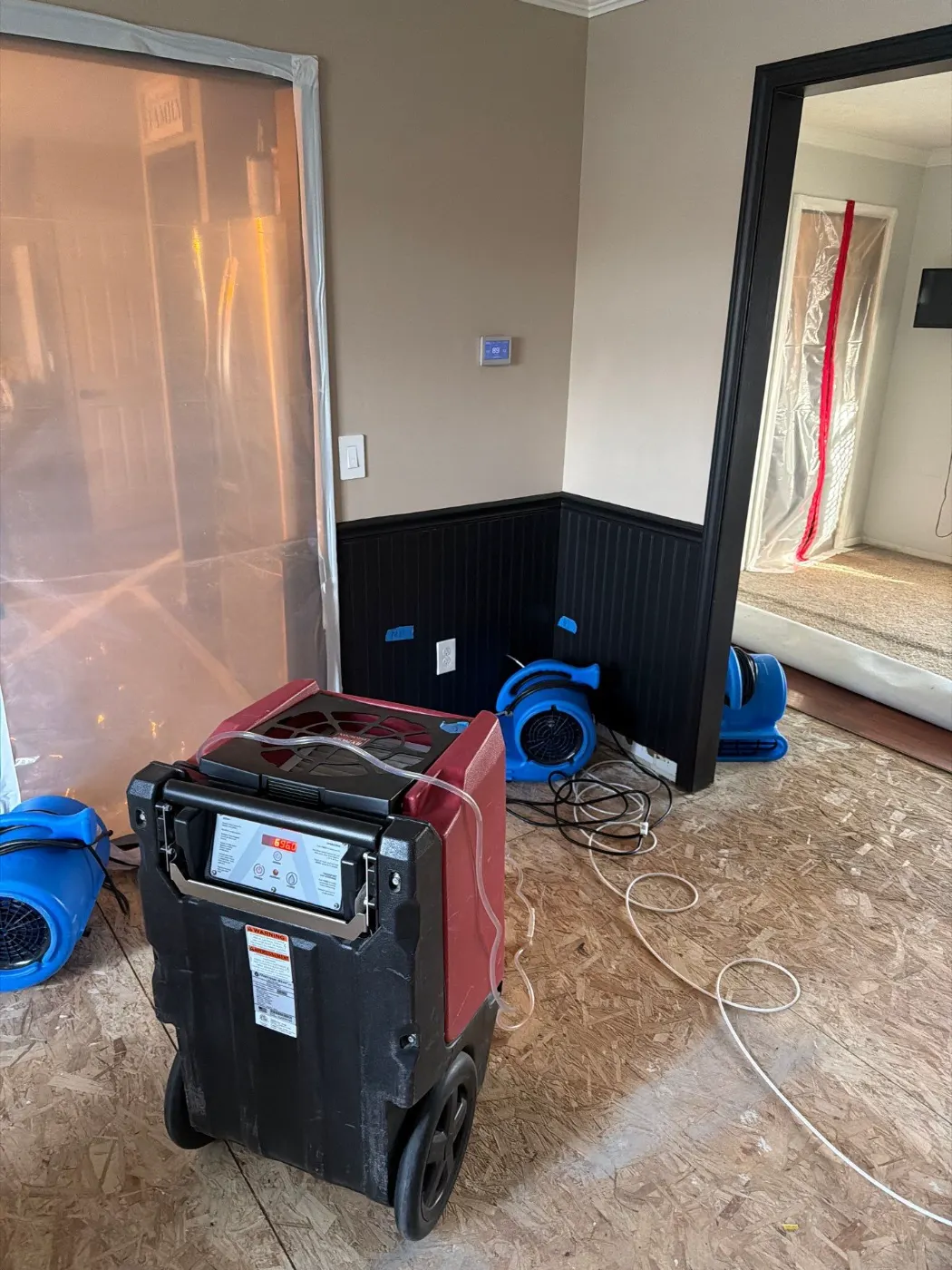
Before we remove anything, Trader's Point Water Restoration technicians map the moisture using thermal imaging and penetrating meters. We mark the wet boundary on walls and floors so nothing gets missed. Then we set containment with plastic sheeting to keep contaminated air and particles from spreading to clean parts of your home. This is the same protocol used for any professional sewage cleanup job, because the contamination class is identical whether the source is a backed up main or a single overflowing toilet.
Containment also protects your HVAC system. We shut down the affected zone, seal return vents in the work area with plastic, and isolate the bathroom so airborne contaminants are not pulled into bedrooms or living spaces while we work. In two story Trader's Point homes, we check the ceiling directly below the bathroom for staining, sagging, or active dripping before any extraction begins, because that often signals water has already traveled through the floor system.
Problem: Standing Black Water Cannot Be Treated Like a Clean Spill
Towels and shop vacs will not handle Category 3 water safely. You risk aerosolizing pathogens, contaminating your vacuum, and pushing water deeper into the structure. Bleach alone does not penetrate porous materials, and household disinfectants are not rated for sewage grade exposure. Skin contact with this water can transmit E. coli, hepatitis, and other bacterial and viral pathogens, which is why even a small overflow is not a DIY situation once it leaves the toilet bowl.
Solution: Extraction With truck mounted Equipment and EPA-Registered Antimicrobials
Our team arrives in PPE with truck mounted extractors that pull water out of carpet, pad, and crevices at far higher rates than any rental unit. Once the bulk water is removed, we apply EPA-registered antimicrobial agents rated for Category 3 cleanup. The general sequence looks like this:
- Remove visible solids and contaminated water using sealed extraction equipment.
- Discard non salvageable porous materials such as carpet pad, drywall wicking, and insulation.
- Clean all hard surfaces with antimicrobial detergents, then apply a sanitizing agent with proper dwell time.
Carpet pad is almost always discarded in a Category 3 loss. Carpet itself can sometimes be cleaned and reinstalled if the contamination was limited, but in many cases full replacement is the safer call. We will give you a straight answer either way.
When to Call Trader's Point Water Restoration in Trader's Point
If contaminated water has crossed the toilet rim and contacted carpet, drywall, baseboards, or any porous surface, you need Category 3 remediation. Not tomorrow. Today. Trader's Point Water Restoration dispatches IICRC certified crews across Trader's Point 24 hours a day with full Category 3 PPE, extraction equipment, and disinfection protocols on every truck. Call us for a same day on site assessment. If the job is smaller than you think, we will tell you. If it is bigger, we will document it correctly the first time so your claim holds up.
Problem: You Do Not Know What Insurance Will Actually Cover
Most homeowners policies cover sudden and accidental toilet overflows, including the resulting water damage and professional cleanup. Coverage gets complicated when the cause is a sewer backup without a specific endorsement, or when the overflow stemmed from a long running slow leak.
Solution: Structural Drying With Documented Moisture Targets
Trader's Point Water Restoration uses commercial air movers, LGR dehumidifiers, and in some cases injection drying systems to pull moisture out of structural materials. We document daily moisture readings until materials hit pre loss dry standard, which usually takes 3 to 5 days depending on materials and how quickly we started. If you also experienced water spread into a lower level, the steps in our basement flooding cleanup guide apply, since gravity often turns a toilet overflow on the second floor into a ceiling damage call below.
When wall cavities are involved, we typically perform what is called a flood cut, removing drywall 12 to 24 inches above the visible waterline so insulation and stud bays can be cleaned, treated, and dried properly. Skipping this step is the single most common reason a job fails inspection or smells bad weeks later.
Frequently Asked Questions
Is a toilet overflow always considered Category 3 black water?
If the overflow contains any waste, toilet paper, or sewer backflow, yes. Clean bowl water caught within the first hour can sometimes be treated as Category 2, but Trader's Point Water Restoration defaults to Category 3 protocols in Trader's Point to protect your family.
Will my homeowners insurance cover toilet overflow cleanup?
Sudden and accidental overflow is typically covered under standard policies. Sewer backup from the municipal line usually requires a separate endorsement. Trader's Point Water Restoration documents the cause and scope so your Trader's Point adjuster has what they need.
How long does Category 3 water cleanup take?
Most single-bathroom overflows take 3 to 5 days for extraction, demolition, disinfection, and drying. Reconstruction adds another 1 to 3 weeks depending on materials and permits in Trader's Point.
Can I clean up a small toilet overflow myself?
If it is clean bowl water under one gallon and caught immediately on a hard non-porous surface, yes. Anything involving waste, porous materials, or wall cavities needs certified equipment and biohazard disposal.
What makes Trader's Point Water Restoration different from other Trader's Point cleanup companies?
We are IICRC certified, BBB A+ rated, and founded in 2018 on one rule. If we cannot help, we will tell you directly. No padded scope, no scare tactics, and full insurance documentation on every job.
Have a restoration question?
Our IICRC certified Trader's Point crew is ready to help. Free assessments, estimate based on what we can sees, no pressure.